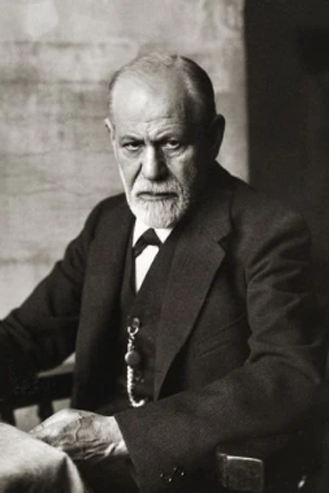
Exploring everyday dream life can be richly rewarding and a source of personal enrichment and personal growth. Let’s start with Sigmund Freud’s (1856-1939) pioneering approach. Condensation To unlock dreams, Freud proposed four dream processes or mental filters that disguise the meanings of dreams. The first is Condensation in which severalContinue Reading

In numerous studies from around the world, people have witnessed an event, received or not received misleading information about it, and then taken a memory test. The repeated result is a misinformation effect. After receiving subtle misinformation, they have misremembered coke cans as peanut cans, breakfast cereal as eggs, andContinue Reading

Each day we make hundreds of decisions and judgements. Should you take an umbrella? Can I believe that person? We seldom take the time or effort to reason systematically. We usually just follow our intuition. Throughout business, government and the educational worlds, “using an effective problem-solving approach almost doesn’t exist.”Continue Reading

According to Sigmund Freud (1856-1939), our psyche resembles an iceberg, with the area of primitive drives, the Id, lying hidden in the unconscious. The Ego interacts with conscious thoughts and regulates both the Id and the Superego – our critical judging voice. The Id The Id, is formed of innate,Continue Reading

Our memories are not stored or retrieved as exact copies of our experiences. We construct memories by using what has already been stored along with new information. If we are exposed, even subtly, to misinformation after an event, or if we repeatedly imagine or rehearse an event that never happened,Continue Reading

If you’ve ever found yourself forgetting where you left your keys, or blanking out on information that’s right on the tip of your tongue, then you have probably wished that your memory was a little better. Fortunately, the psychology of memory suggests effective strategies for improving memory. Some good practicesContinue Reading

A near-death experience is defined as an altered state of consciousness reported after a close brush with death (such as by cardiac arrest). The experience is similar to drug-induced hallucinations. In studies of those who have come close to death through cardiac arrest or other physical traumas, twelve to fortyContinue Reading

“I think therefore I am” is the English translation of French philosopher René Descartes’ (1596-1650) Cogito Ergo Sum, or “thinking Is: therefore the mind Is,” or rather “the mind exists: therefore there is thinking.” Throughout history, a conflict of theories has existed concerning what the human mind is, what structureContinue Reading